Virtual Caustics and Multiple Imaging
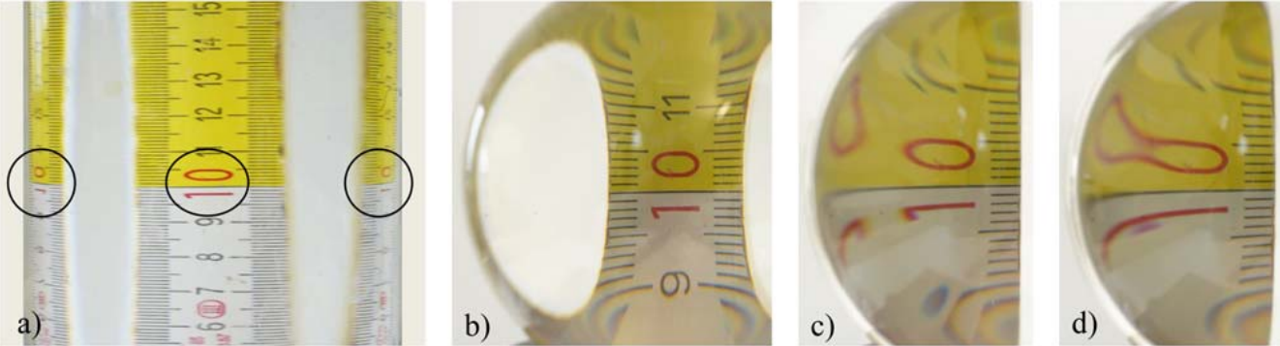
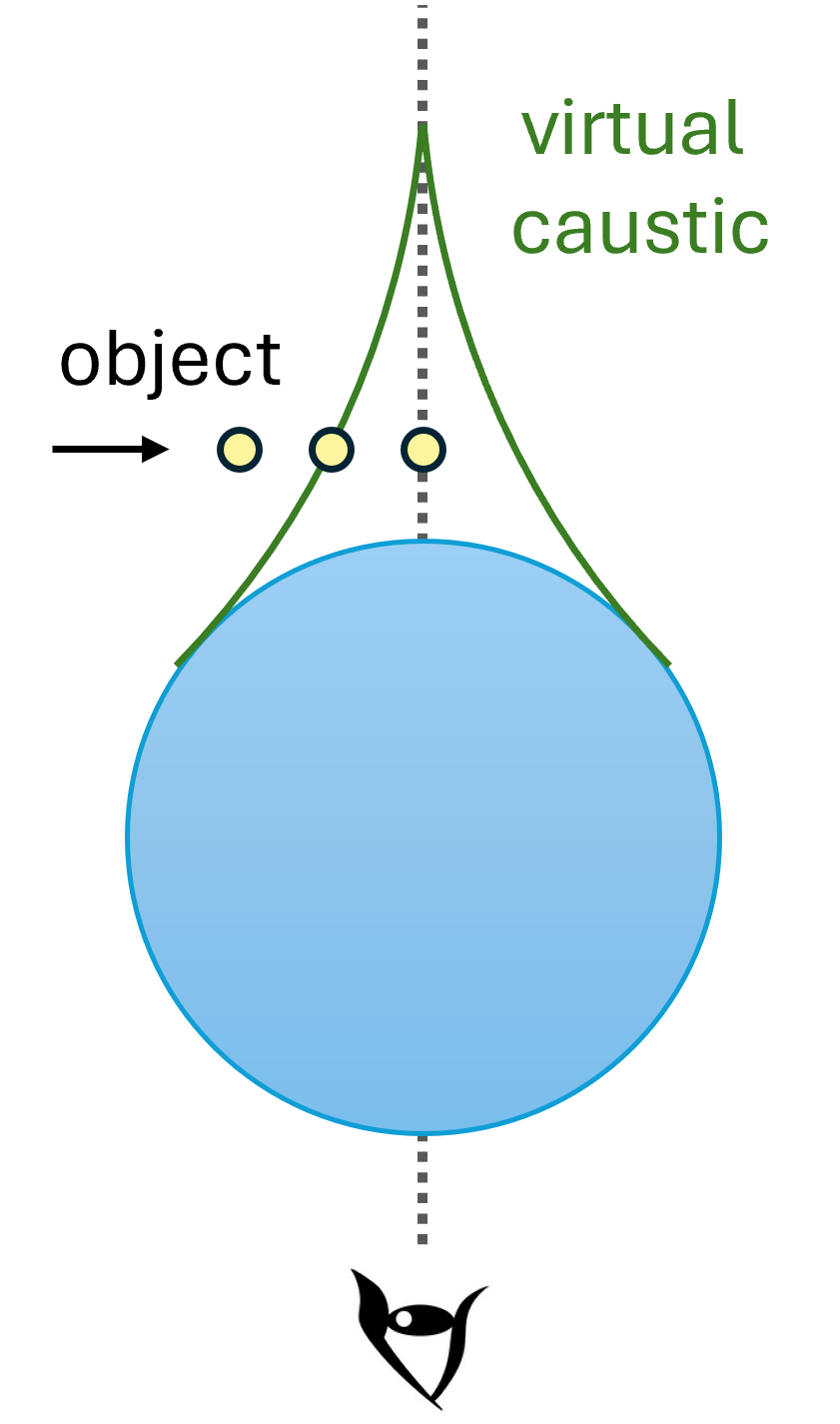
Lens phenomena such as caustics, image distortions, and multiple images are frequently observed with refracting objects such as raindrops, drinking glasses, or vases. An optical tool that helps make such phenomena intelligible is Berry’s virtual (eye) caustic. In contrast to the conventional paraxial approximation, it enables a more comprehensive understanding of image transformations throughout the entire optical space. Experimentally, the kinship between the virtual caustic and the familiar light caustic can be demonstrated easily. This approach opens new perspectives for optics education because it addresses two key challenges of image formation: the limitations of the paraxial approximation and the central role of the observing eye.
Contributions on the virtual caustic
-
Quick, T. & Grebe-Ellis, J. (2024): The Eye Caustic of a Ball Lens, European Journal of Physics 4/45: 1-23
Abstract: Lens phenomena, such as caustics, image distortions, and the formation of multiple images, are commonly observed in various refracting geometries, including raindrops, drinking glasses, and transparent vases. In this study, we investigate the ball lens as a representative example to showcase the capabilities of Berry’s eye caustic as an optical tool. Unlike the conventional paraxial approximation, the eye caustic enables a comprehensive understanding of image transformations throughout the entire optical space. Through experimental exploration, we establish the relationship between the eye caustic and traditional light caustics. Furthermore, we provide mathematical expressions to describe both the caustic and the image transformations that occur when viewing objects through the ball lens. This approach could be of interest for optics education, as it addresses two fundamental challenges in image formation: overcoming the limitations of the paraxial approximation and recognizing the essential role of the observer in comprehending lens phenomena. (Full text)