Virtuelle Kaustik und Mehrfachabbildungen
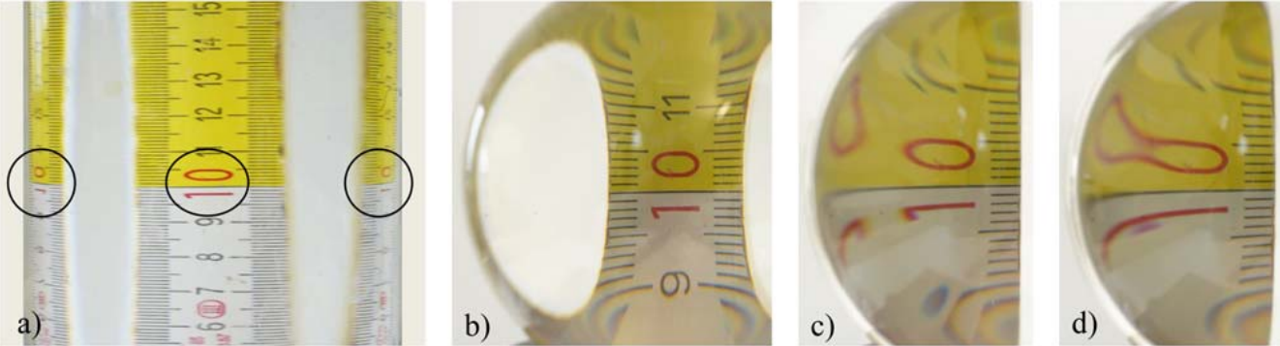
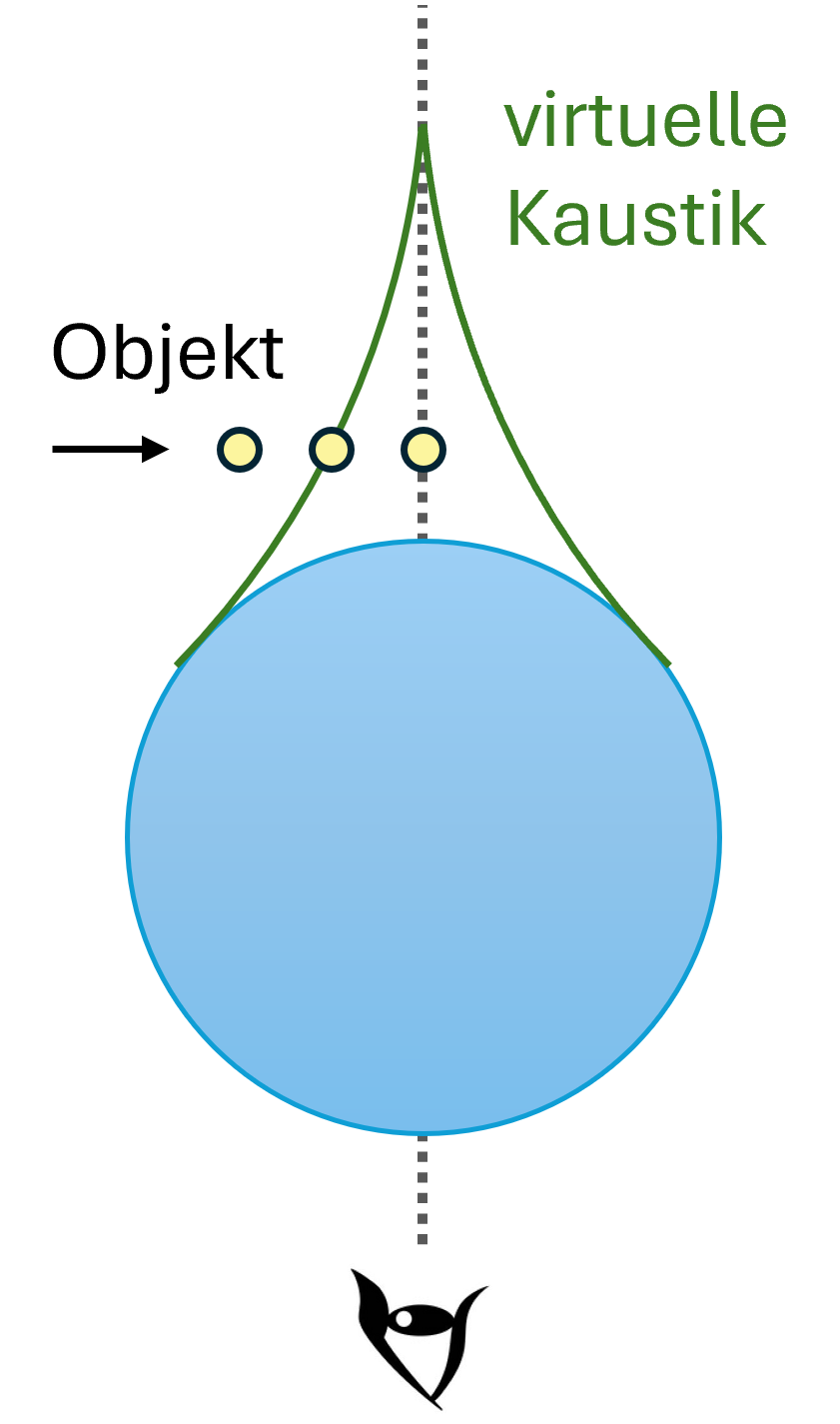
Linsenphänomene wie Kaustiken, Bildverzerrungen und Mehrfachbilder treten häufig bei lichtbrechenden Objekten wie Regentropfen, Trinkgläsern oder Vasen auf. Ein optisches Werkzeug, dass solche Phänomene verständlich macht, ist die virtuelle Kaustik nach Berry. Im Gegensatz zur klassischen paraxialen Näherung ermöglicht sie ein umfassenderes Verständnis von Bildveränderungen im gesamten optischen Raum. Experimentell lässt sich die Verwandtschaft zwischen der virtuellen Kaustik und der herkömmlichen Lichtkaustik leicht zeigen. Dieser Ansatz bietet neue Perspektiven für die Optikdidaktik, da er zwei zentrale Herausforderungen der Bildentstehung adressiert: die Grenzen der paraxialen Näherung und die zentrale Rolle des beobachtenden Auges.
Beiträge zur virtuellen Kaustik
-
Quick,T. & Grebe-Ellis, J. (2024): The Eye Caustic of a Ball Lens, European Journal of Physics 4/45: 1-23
Abstract: Lens phenomena, such as caustics, image distortions, and the formation of multiple images, are commonly observed in various refracting geometries, including raindrops, drinking glasses, and transparent vases. In this study, we investigate the ball lens as a representative example to showcase the capabilities of Berry’s eye caustic as an optical tool. Unlike the conventional paraxial approximation, the eye caustic enables a comprehensive understanding of image transformations throughout the entire optical space. Through experimental exploration, we establish the relationship between the eye caustic and traditional light caustics. Furthermore, we provide mathematical expressions to describe both the caustic and the image transformations that occur when viewing objects through the ball lens. This approach could be of interest for optics education, as it addresses two fundamental challenges in image formation: overcoming the limitations of the paraxial approximation and recognizing the essential role of the observer in comprehending lens phenomena. (Volltext)