Measuring the Sun
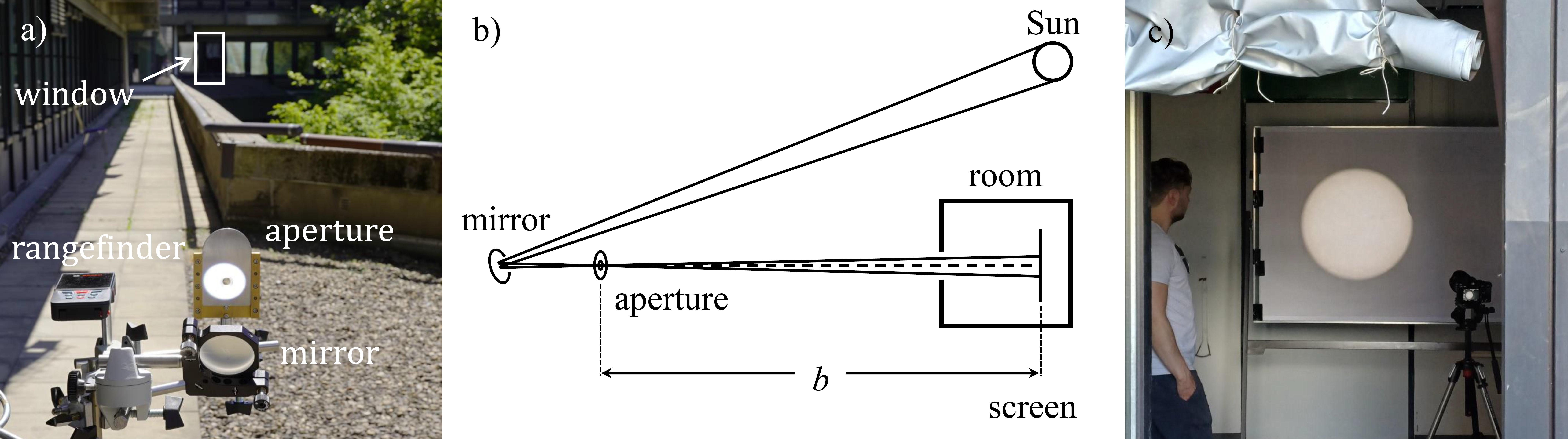
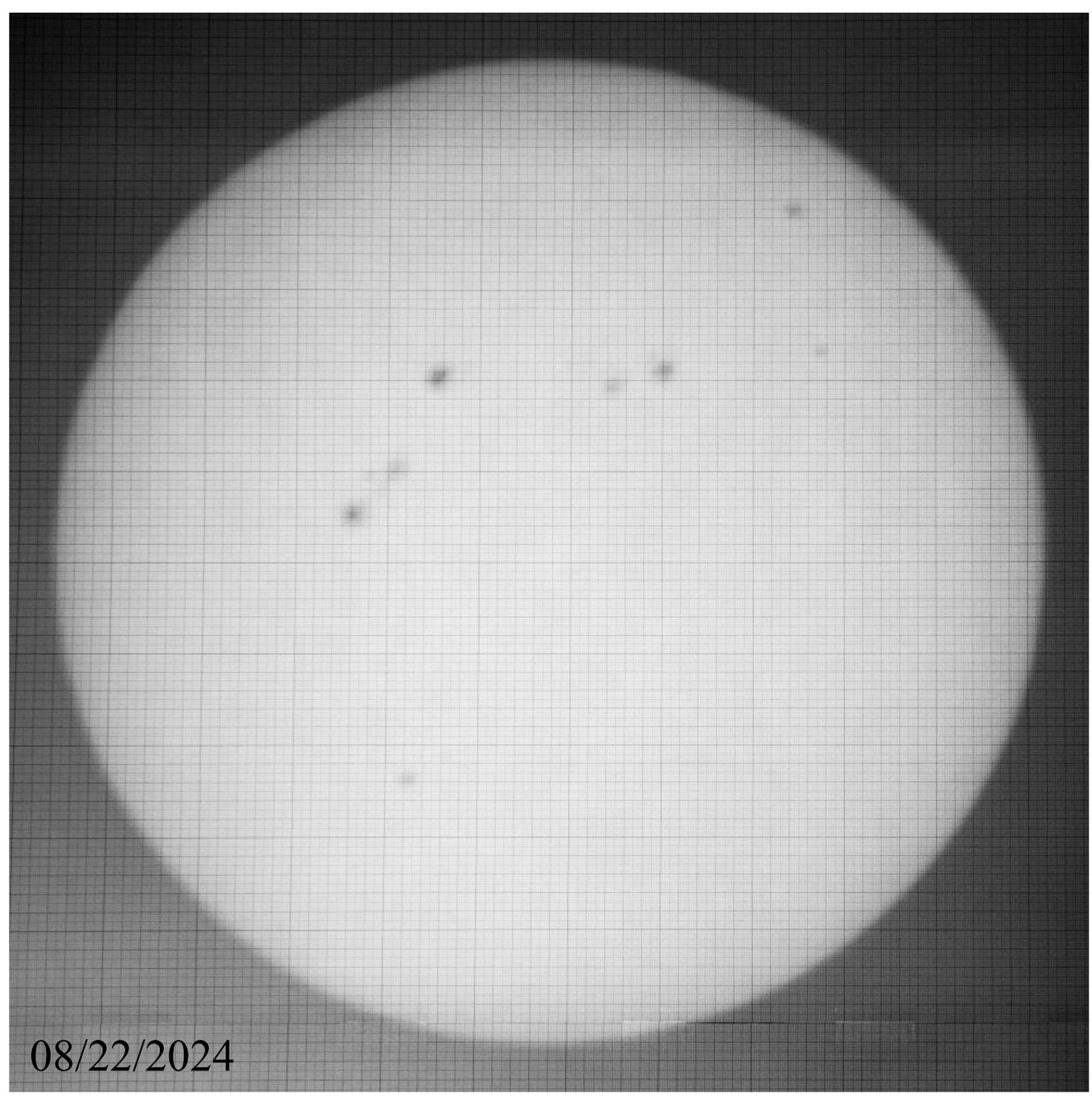
Imaging the Sun with a pinhole camera is a standard experiment in school optics. But can such a simple setup reveal more than just a circular patch of light? In a year-long experiment, we explored whether the Sun’s annual variation in apparent size—caused by Earth’s elliptical orbit—can be detected experimentally. By projecting large-scale solar images, these subtle changes became visible. At the same time, the images revealed short-term effects such as atmospheric seeing and, under favorable conditions, even sunspots.
Contributions on Pinhole Imaging
-
Grebe-Ellis, J. & Quick, T. (2026): From Pinhole Imaging to Planetary Orbit: A Year-Long Solar Angular Measurement with a Pinhole Camera, American Journal of Physics 2/94: xx–xx
Abstract: We present a year-long experiment using a pinhole camera to determine the Sun’s angular size, employing a flat mirror to project large-scale solar images of about 50–60 cm in diameter. Our analysis resolves the annual angular variation of 65 arcseconds, reflecting Earth’s elliptical orbit. Additionally, we observed atmospheric seeing effects and sunspots visible with the naked eye. The project offers an accessible platform for high school and undergraduate students to engage in scientific inquiry.